Le travail d'un médecin ne se limite pas à la consultation. Il s'éparpille tout au long de la journée : entre deux patients, tôt le matin, tard le soir. Un compte rendu à compléter, un courrier d'adressage à envoyer, un message qui ne peut pas attendre… Avec le temps, chacune de ces tâches s'est retrouvée gérée par un outil différent, avec son propre fonctionnement, son propre contrat et son propre coût.
L'IA ambiante a déjà changé la donne. Mais en partie seulement.
Laurent Landowski, Chief Product Officer de Nabla, et Matt Sakumoto, Chief Clinical Product Officer, expliquent ce qui manquait encore et pourquoi la dictée s'est imposée comme la suite logique. Leur objectif : accompagner le médecin bien au-delà de la consultation, avec un seul et même outil.
Ambiante et dictée dans un même outil : qu’est-ce que ça change ?
Laurent : L'IA ambiante ne règle qu'une partie du problème. Elle couvre la consultation, c'est-à-dire l'échange entre le médecin et son patient. Or la documentation déborde largement de ce cadre : les médecins dictent leurs réponses aux messages dès le matin, reprennent leurs comptes rendus après une consultation complexe, rédigent un courrier d'adressage entre deux patients.
Tout cela se faisait encore ailleurs, avec un autre outil, un autre contrat, une autre façon de travailler. Une fois ce constat posé, ajouter la dictée ne relevait plus d'une simple extension de notre offre. C'était une évidence.
Matt : Côté médecins, c'est l'un des retours qui revenaient le plus souvent. Ils nous disaient combien l'IA ambiante leur rendait service… avant d'ajouter aussitôt qu'ils jonglaient encore entre plusieurs outils pour tout le reste.
Résultat : un quotidien coupé en deux, avec d'un côté une IA dernier cri, de l'autre un dictaphone tout droit sorti des années 1970. À force, ce morcellement pèse. Ce n'est pas comme ça que les médecins vivent leur travail, et ce n'est pas dans ce sens que nous voulions faire évoluer le produit.
Qu'attendaient concrètement les médecins ?
Matt : Des choses très pragmatiques. D'abord, pouvoir dicter directement dans le dossier patient informatisé (DPI), là où se trouve le curseur, sans changer d'écran. Ensuite, garder leurs habitudes : leurs raccourcis qui insèrent un texte type dans le dossier, leurs modèles déclenchés à la voix, leurs commandes vocales. Ce n'est pas un détail. Ces réflexes et ces petits gains de temps, répétés pour des centaines de patients par jour, finissent par peser lourd. Leur demander de tout réapprendre, ce n'est tout simplement pas réaliste.
Laurent : Au fond, leur demande tenait en une phrase : « Ne m'obligez pas à me demander quel outil utiliser. » Les médecins enchaînent déjà les décisions toute la journée. Choisir le bon logiciel de documentation ne devrait pas en faire partie.
IA ambiante et dictée : deux approches concurrentes ?
Laurent : Pas du tout, elles se complètent. L'IA ambiante est passive : elle tourne en arrière-plan pendant la consultation et produit un compte rendu structuré. La dictée, elle, est active : on y a recours quand on sait exactement ce qu'on veut écrire et qu'il faut aller vite.
Ce sont deux modes différents, mais ils ont toute leur place au même endroit. L'idée n'est pas de choisir l'un ou l'autre, mais de pouvoir passer de l'un à l'autre sans effort.
Matt : Cliniquement, c'est très simple : l'IA ambiante s'occupe de la consultation, la dictée de tout ce qui gravite autour. S'il manque l'une des deux, il reste un trou, et les médecins iront chercher un autre outil pour le combler.
Avec les deux réunies, la boucle est bouclée.
Les grands réseaux de soins américains cherchent à rationaliser leurs outils. Quelle est votre approche ?
Laurent : Aux États-Unis, la plupart des « health systems », ces réseaux qui regroupent hôpitaux, cliniques et cabinets, n'ont jamais voulu d'un parc d'outils aussi éclaté. Il s'est constitué au fil de l'eau, chaque nouveau besoin apportant son nouveau logiciel.
Aujourd'hui, ils se retrouvent à gérer une multitude de fournisseurs, de contrats et d'intégrations. Cette complexité a un coût financier, mais elle alourdit aussi le fonctionnement au quotidien et crée des frictions pour les soignants.
Il y a mieux à faire : non pas ajouter un énième outil, mais s'appuyer sur une solution d'IA déjà ancrée dans la pratique clinique.
Matt : Encore faut-il que les médecins l'adoptent vraiment. C'est là que le sentiment de familiarité devient déterminant.
Nous avons tout fait pour que la dictée paraisse naturelle dès le premier jour, en reprenant les commandes, les modèles et le matériel que les médecins utilisaient déjà. Dans un grand réseau de soins où nous l'avons déjà déployée, ils ont enregistré près de 200 heures de dictée en un mois, sans même suivre de formation. Une adoption pareille montre que la transition se fait en douceur.
Concrètement, qu'apporte le fait de tout réunir au même endroit ?
Matt : Pour les médecins, c'est moins de frictions. Une journée de documentation, ce sont des moments très différents : en consultation, entre deux patients, le soir pour rattraper son retard sur les comptes rendus.
Quand un seul outil accompagne tous ces moments, on cesse de les vivre comme des tâches séparées. Ça devient simplement une façon de travailler.
Laurent : Pour les établissements, c'est une gestion simplifiée : une seule intégration, un seul interlocuteur pour le support, une seule feuille de route.
L'enjeu n'est pas seulement financier, il est aussi opérationnel. Le but, c'est d'avoir moins de rouages, pas davantage.
Sur le terrain, qu'est-ce que ça change ?
Matt : Une médecin hospitalière m'en a récemment donné un très bon exemple. Le matin, elle fait sa visite et enchaîne les chambres à un rythme soutenu. L'IA ambiante documente les échanges au fil de l'eau : pas besoin de reconstituer ses comptes rendus après coup.
Puis le reste de la journée prend le relais. Il faut répondre à un message, mettre à jour les transmissions pour l'équipe suivante, dicter un compte rendu de sortie. Avant, cela voulait dire changer d'outil et perdre le fil.
Désormais, c'est la même expérience du début à la fin : même interface, mêmes commandes, mêmes repères. Elle m'a confié que, pour la première fois, sa journée formait un tout cohérent plutôt qu'une suite d'interruptions. C'est exactement ce que nous recherchons.
Je le constate aussi dans mon propre cabinet : environ 80 % du travail se fait hors de la salle de consultation. Coordination des soins, messages des patients via le portail en ligne, échanges avec l'équipe… C'est là que la dictée fait toute la différence.
Et maintenant, quelle suite pour la dictée ?
Laurent : Pour nous, c'est un point de départ. Une reconnaissance vocale de qualité médicale, couplée à une intégration poussée dans le DPI, ouvre énormément de possibilités.
La prochaine étape, c'est le contexte : comprendre non seulement ce que dit le médecin, mais ce qu'il cherche à faire, pour l'aider à y arriver plus vite.
Il reste encore un vrai fossé entre le poids de la documentation et ce que la technologie permet d'alléger aujourd'hui. Nous travaillons à le combler, étape par étape.
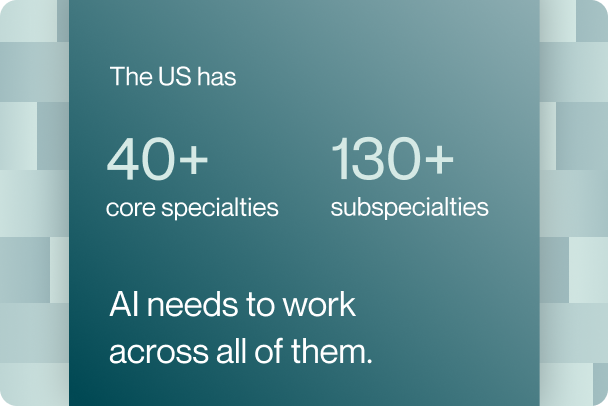
Matt : Sur le plan clinique, chaque spécialité a ses propres besoins. La chirurgie, la radiologie ou l'anatomopathologie, par exemple, s'appuient énormément sur une dictée précise et structurée.
Pour bien les servir, il faut comprendre finement leurs façons de travailler. C'est un chantier dans lequel nous investissons de façon ciblée.
Pour conclure, si vous deviez tout résumer en une idée ?
Laurent : Les médecins ne vivent pas la documentation comme une série de tâches cloisonnées. C'est une seule et même responsabilité, du matin au soir.
Matt : Et les outils doivent être à cette image : un seul système qui accompagne le médecin dans tout son travail, pas seulement en consultation.