When CharmHealth recently hosted a webinar on its AI strategy, the conversation covered much more than ambient documentation.
It offered a glimpse into how EHR vendors are approaching the next generation of clinical AI: not by trying to build every capability themselves, but by bringing specialized AI into the platform and giving clinicians a choice of what fits their practice.
That philosophy was evident throughout the discussion, from CharmHealth’s broader AI roadmap to a live demonstration of Charm AI Scribe, powered by Nabla.
CharmHealth’s Vision for Clinical AI
One of the clearest themes from the webinar was that CharmHealth isn’t approaching AI as a single feature or product. Instead, the company is building an AI-powered EHR designed to reduce administrative burden across the entire clinical workflow. CharmHealth’s strategy is centered on helping clinicians spend less time navigating technology and more time focused on patient care. As the team put it during the webinar, “the EHR should do the work, so providers can focus on the patient in front of them.”
Rather than building every AI capability internally, CharmHealth has chosen to bring best-in-class functionality directly into the EHR, with options so clinicians can select what fits. Nabla is one example.
Why a Broader Ecosystem Matters
One theme surfaced repeatedly throughout the webinar: no single AI solution covers every clinical and administrative workflow. CharmHealth works with a range of AI tools and vendors, each suited to a different part of the practice, from ambient documentation to revenue cycle management, billing, and coding. Practices can build the combination that fits their needs.
EHR vendors bring deep expertise in clinical workflows, interoperability, and practice operations. Specialized AI companies bring years of focused investment in areas like ambient documentation, speech recognition, and clinical note generation. Bringing those capabilities natively into the platform lets each organization focus on what it does best, gets capabilities to clinicians faster than building them from scratch, and keeps them current as the underlying AI advances.
For customers, that means they don’t have to choose between a familiar EHR and modern AI. They get specialized capabilities in a single workflow, and the AI keeps getting better over time.
A Better Experience for Clinicians
During the live demonstration, Nabla Chief Clinical Product Officer Dr. Matt Sakumoto showed how documentation is generated directly within CharmHealth, allowing clinicians to review, customize, and export notes without leaving the EHR.
Just as importantly, he demonstrated how the experience can be tailored to individual clinicians and specialties. From note formatting and physical exam templates to specialty-specific instructions, customization ensures AI adapts to the clinician’s workflow.
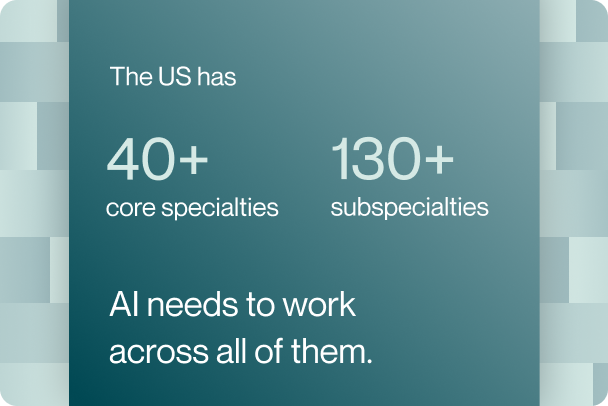
That flexibility matters because no two specialties document care in exactly the same way.
Innovation Doesn’t Stop at Launch
Another theme that emerged throughout the Q&A was continuous collaboration.
Whether attendees asked about additional specialties, patient context, telehealth workflows, or future capabilities, the discussion consistently reflected an ongoing collaboration between the CharmHealth and Nabla teams. Product improvements aren’t happening in isolation, they’re being shaped together based on clinician feedback.
That collaborative model benefits everyone involved. EHR vendors can continue evolving their platforms, AI partners can continuously improve specialized capabilities, and clinicians receive a more integrated experience that gets better over time.
The Future of Clinical AI Is Collaborative
Perhaps the biggest takeaway from the webinar wasn’t a particular feature or product announcement. It was a broader shift in how healthcare technology is evolving.
Rather than building isolated AI tools, healthcare organizations increasingly expect connected platforms where the EHR, ambient documentation, and other AI capabilities work together as one experience.
The result isn’t simply better technology. It’s a more cohesive workflow that reduces administrative burden while allowing clinicians to stay focused on patient care.